
Missouri Attorney General Catherine L. Hanaway filed suit against GPD Holdings LLC, doing business as CoinFlip, on May 20, 2026, alleging the operator profited from elder fraud and concealed transaction fees of up to 21.90% behind a prominently displayed $2.99 "Network Fee." The petition was filed in the Circuit Court of Jasper County and seeks restitution, civil penalties, punitive damages, and a preliminary and permanent injunction halting CoinFlip's Missouri operations until fraud-prevention measures are implemented.
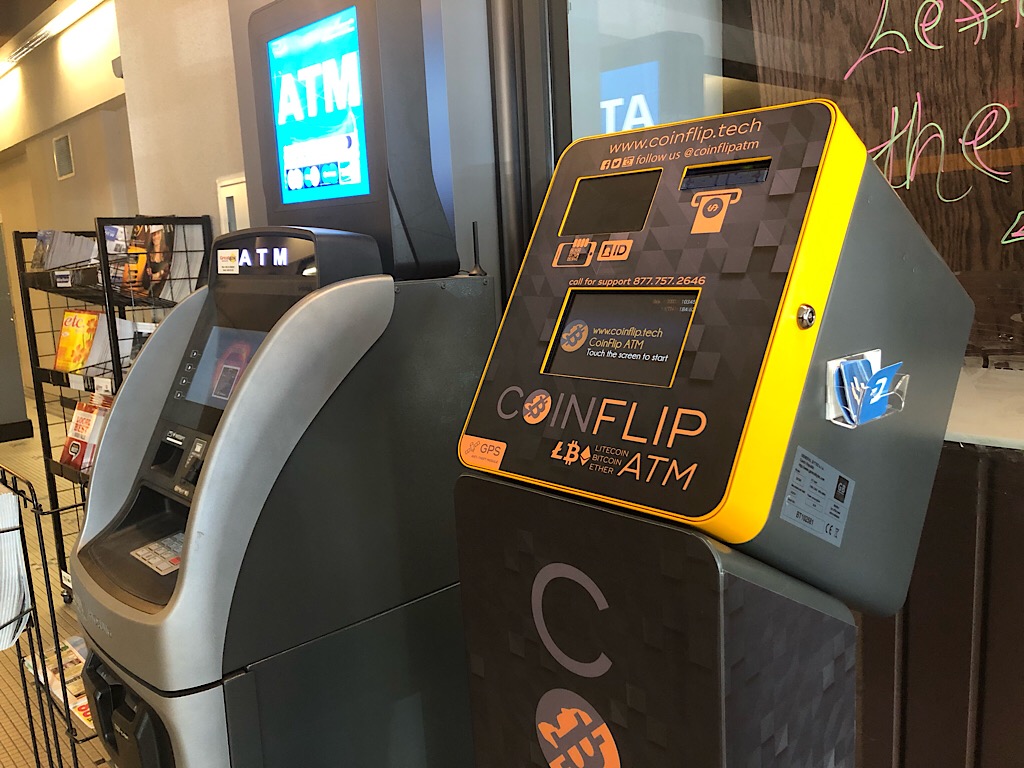

The case escalates Missouri's posture toward the operator from investigative — the state served a Civil Investigative Demand on CoinFlip in January 2026 — to active litigation under the Missouri Merchandising Practices Act (MMPA). It is the second AG lawsuit CoinFlip now faces, alongside the pending Iowa Attorney General action filed in February 2025.
Case: State of Missouri ex rel. Catherine L. Hanaway v. GPD Holdings LLC d/b/a CoinFlip
Court: Circuit Court of Jasper County, 29th Judicial Circuit
Filed: May 20, 2026
Legal Basis: Missouri Merchandising Practices Act, Mo. Rev. Stat. § 407.020
Relief Sought: Up to $1,826,000 in civil penalties, restitution, punitive damages, injunction
The Lead Allegation: Cryptocurrency Has Become the Scammer's Payment of Choice
The petition opens with a framing that has become familiar in AG actions against Bitcoin ATM operators, but Hanaway's office puts it more bluntly than most: "Cryptocurrency has sadly proven itself an effective means for scammers to hide their tracks and avoid the paper trails of standard financial transactions." The state alleges CoinFlip is "but one such company" that "facilitate[s] and then handsomely profit[s] off these financially devastating swindles."
CoinFlip advertises itself as the "world's largest network of cryptocurrency ATMs by transaction volume," according to its own website cited in the complaint. The company operates more than 5,500 kiosks globally and 143 in Missouri as of September 26, 2025. The state alleges that nearly all of CoinFlip's deployed Missouri fleet — approximately 140 of about 143 machines — are one-way kiosks that only accept cash for cryptocurrency, not the reverse, a design choice the petition characterizes as evidence that "consumers are often scammed and only need to deposit cash into the machines."
Three Named Victims, Approximately $200,000 in Losses
The petition recounts three Missouri victims by number, with combined losses approaching $200,000. The state warns these are illustrative and that aggregate Missouri fraud losses through CoinFlip kiosks "total in the millions of dollars."
"In the fall of 2025, someone using the name Selina Lee contacted Victim #1 — an 80-year-old veteran — by text message... He ultimately sent Lee a total of $180,000.00–$200,000.00 from September 2025 to March 2026... He sold his vehicle, pulled money out of his legitimate investment accounts, and almost lost his apartment."
— Petition ¶ 5, State v. GPD Holdings LLC
Victim #1, an 80-year-old veteran who now "subsists off Social Security," was directed to CoinFlip kiosks where, according to the complaint, "the ATM itself never clearly stated a fee that Victim #1 would be charged for the transaction." Both the FBI and the St. Peters, Missouri Police Department declined to assist him.
Victim #2 was targeted by a fake-warrant scam in March 2026 demanding $2,500 deposited at a cryptocurrency kiosk. After withdrawing $1,000 from her bank, she drove with her infant daughter to a Carthage vape shop housing a CoinFlip kiosk. A store employee intervened and told her she was being scammed. When she later contacted CoinFlip, the petition alleges, "the CoinFlip representative said he was familiar with the scam and said he was not sure if she could get her money back" — ultimately refunding only $182.38 in fees. The state notes Victim #2 "does not recall any conspicuous disclosures about transaction fees."
Victim #3, in April 2025, was directed to a CoinFlip kiosk bearing a sign falsely claiming the machine was "FDIC Police Monitored." She deposited $900 before realizing she was being scammed. CoinFlip told her "the money was already gone."
The Fee Allegations: A "Drip Pricing" Variant
Count II of the petition focuses on what other states have characterized as drip pricing. The state alleges CoinFlip displays a $2.99 "Network Fee" prominently on-screen during transactions, while a separate "Transaction Fee" of up to 21.90% of the transaction value is "buried" in the Terms of Service and not displayed during the transaction.
How the alleged concealment works:
- On-screen display shows "$2.99 Flat Fee" during the transaction
- The Transaction Fee — up to 21.90% — is disclosed only in combined Terms of Service covering online, app, and kiosk services
- Per the petition: "if a Missourian put $100 cash into the machine, that consumer may only receive back about $75.76 worth of Bitcoin"
- None of the three named victims recall a conspicuous fee disclosure
The state cites Missouri case law establishing that price is a "material term" of any contract (Hutchens v. Burrell, Inc., 342 S.W.3d 399), and argues CoinFlip's structure intentionally led consumers "to assume its fee structure was like a traditional bank ATM."
The Unfairness Theory: CoinFlip's Own Policies as Evidence
Count I builds an unfairness case using CoinFlip's own published policies and training materials as evidence of knowing facilitation. The petition quotes CoinFlip's Financial Exploitation Reporting Policy, under which the company says its "frontline" employees are "trained to identify elder abuse, along with scams and fraud typologies common to cryptocurrency" — specifically tasked with flagging "suspicious behavior, transactions, and interactions of customers over sixty years old."
The state also quotes CoinFlip's terms of service, which require users to confirm they will "[o]nly send cryptocurrency [themselves] and not others[,] [o]nly send cryptocurrency to a digital wallet owned by [them, and] [n]ever send cryptocurrency to someone [they] do[]n't know or ha[]n't met in person." CoinFlip itself states, the petition notes, that "sending funds to another person is not permitted by our terms and conditions."
The unfairness argument is that CoinFlip publicly acknowledges these risks, has the technical tools to mitigate them (including Elliptic blockchain analytics software and internet-connected cameras on every kiosk), but allegedly does not enforce its own policies because doing so would reduce transaction volume and fee revenue.
Claims for Relief
The Targeting Allegation
The petition includes pointed language about who CoinFlip allegedly markets to. It quotes CoinFlip's current CEO Ben Weiss describing the company's strategic choice: "we saw all these unbanked and underbanked communities who were kind of being left out of this financial revolution... so that's why we went the ATM route instead of the exchange route." The state pairs this with CoinFlip's own marketing language describing its kiosks as "an excellent choice for first-time crypto buyers" placed in "corner shops, grocery stores, gas stations, restaurants."
The state contrasts CoinFlip's stated mission with what it characterizes as the operator's actual customer profile: "older individuals with large sums of assets in traditional bank accounts" who "frequently... direct funds to dozens of Bitcoin address[es] and wallets — a major red flag."
The petition also notes that, while CoinFlip charges "exorbitant transaction fees, it has never been easier to buy cryptocurrency" through cheaper alternatives — naming Coinbase, Kraken, Binance, Fidelity, Charles Schwab, Robinhood, Venmo, CashApp, and PayPal.

The Industry Context
Missouri's filing is the latest in a coordinated multi-state regulatory push. CoinFlip's current trust grade stood at F before today's filing, reflecting an active Iowa AG consumer protection lawsuit and a Missouri Civil Investigative Demand issued January 27, 2026.
CoinFlip's expanding legal exposure:
- Feb. 26, 2025: Iowa AG consumer protection lawsuit filed
- Jan. 27, 2026: Missouri AG issues Civil Investigative Demand (alongside CIDs to Bitcoin Depot, Athena, RockItCoin, and Byte Federal)
- May 20, 2026: Missouri AG converts investigation into active lawsuit in Jasper County
The Missouri filing notably does not name a specific scam-rate percentage for CoinFlip's Missouri transactions — instead pointing to CoinFlip's internal data showing 99.64% of its transactions in 2021 were purchases (not sales) as a structural indicator that "victims use CoinFlip's BTMs for fraudulent transfers."
What This Means for CoinFlip Customers in Missouri
If you've used a CoinFlip kiosk in Missouri:
- Restitution is being sought for all Missouri consumers charged the undisclosed Transaction Fee in the past five years. You do not need to be a named victim to be eligible.
- If you sent funds at the direction of someone you met online, by text, or by phone — including anyone claiming to be law enforcement — contact the Missouri AG's Consumer Protection Section.
- Report fraud to IC3.gov (FBI Internet Crime Complaint Center) and to local police, though the petition acknowledges recovery prospects are limited once cryptocurrency leaves the kiosk.
- Review consumer protection resources for guidance on identifying and reporting Bitcoin ATM scams.
What This Means for Operators
Two specific aspects of this petition warrant attention from every Bitcoin ATM operator's compliance team.
First, the state is weaponizing operators' own policies. Hanaway's office quotes CoinFlip's Financial Exploitation Reporting Policy, terms of service, and CEO statements to establish that the company knew the risks and represented to the public that it had mitigation in place. Operators who publish detailed fraud-prevention policies without operational enforcement now face a documented gap between representation and conduct — and that gap is the unfairness theory.
Second, the fee-display theory is becoming standardized. Missouri's drip-pricing allegation mirrors the structure pleaded by Massachusetts against Bitcoin Depot and DC against Athena Bitcoin: a small flat fee displayed prominently, a much larger percentage fee disclosed only in terms of service. Operators relying on multi-document fee disclosures — terms of service for online, app, and kiosk combined — should expect this to be treated as concealment, not disclosure.
Operators should also note the Restatement (Second) of Torts § 876 theory the state imports into Count I: "for harm resulting to a third person from the tortious conduct of another, one is subject to liability if he... knows that the other's conduct constitutes a breach of duty and gives substantial assistance or encouragement to the other." Missouri is functionally pleading aiding-and-abetting liability for foreign scammers — a theory other states are likely to adopt.
What to Watch Next
CoinFlip has not yet filed a responsive pleading. The state has demanded a jury trial. Key markers to watch: whether the court grants the requested preliminary injunction halting CoinFlip's Missouri operations pending fraud-prevention reforms, whether CoinFlip removes machines from Missouri preemptively (as Hermes Bitcoin did under California pressure), and whether Missouri AG Hanaway uses the same MMPA framework against the other operators served with CIDs in January — Bitcoin Depot, Athena Bitcoin, RockItCoin, and Byte Federal. If she does, the December 2025 CID wave will have produced four more lawsuits before year-end.