- Bitstop asks Miami court to freeze Chicago Atlantic's $16.96M lawsuit
- 4,000+ disputed Bitcoin ATMs claimed as property of Daryl Heller's bankruptcy estate
- $825M in claims from 90+ creditors in the Heller Chapter 7 bankruptcy
- 794 BTMs allegedly double-sold to multiple purchasers per court-appointed Examiner
- Heller indicted for $770M securities and wire fraud; SEC filed parallel civil action
- Bitstop continues operating the machines while arguing they belong to the estate
Case: Chicago Atlantic Admin, LLC v. ATM Ops, Inc. d/b/a Bitstop, et al.
Court: Circuit Court of the 11th Judicial Circuit, Miami-Dade County, Florida (Complex Business Division)
Case No.: 2026-001057-CA-01 (CA 44)
Filing: Defendants' Motion to Stay Proceedings (February 20, 2026)
Defendants' Counsel: Lalchandani Simon PL (Kubs Lalchandani, Antonio Forte)
Plaintiff's Counsel: Fox Rothschild, LLP (Adam Lamb)
The Motion: Two Legal Bases for a Stay
Bitstop advances two independent arguments for why the Miami case should be frozen.Bitstop's Reframing: From Alleged Converter to "Downstream Actor"
The motion represents a dramatic shift in how Bitstop characterizes its relationship with the disputed assets. In Chicago Atlantic's January complaint, Bitstop is portrayed as an entity that knowingly converted 4,000+ Bitcoin ATMs, refused to return collateral, and publicly announced taking over the Royal Farms merchant relationship with 310 live machines. The motion reframes Bitstop as a passive bystander caught in a chain of title the bankruptcy court is still sorting out. It describes the defendants as being merely in a downstream position, with the ownership question being adjudicated elsewhere. The BTMs, the motion argues, were always PowerCoin's — and PowerCoin was always Heller's — so the real fight is in bankruptcy court.The Heller Ponzi Context: What the Examiner Found
The motion devotes significant space to the Heller bankruptcy and the Examiner's findings — and the picture it paints is damaging context for every party involved.PowerCoin's Role in the Ponzi Flows
The motion itself acknowledges that entities associated with Heller, including Heller Capital and PowerCoin, deposited $23.3 million into PMG's operating account during 2021–2022 and $46.6 million during 2023–2024. These were the same accounts used to make Ponzi distributions to investors. The Chicago Atlantic loan was extended in December 2023 — precisely during this period.
Chicago Atlantic's Prior Lawsuit: A Telling Omission
The motion draws attention to a procedural detail that may resonate with the Miami judge. Chicago Atlantic's first attempt to sue Bitstop came in June 2025, when it filed a pre-complaint discovery action in Montgomery County, Pennsylvania. According to Bitstop's motion, that complaint contained aggressive allegations but notably omitted any mention of Heller, the bankruptcy, or the Ponzi scheme — even though by that date the Examiner had already issued his first report documenting double-selling of BTMs. Chicago Atlantic voluntarily dismissed the Pennsylvania action in December 2025 and refiled in Miami five weeks later — one day after the bankruptcy court converted the case to Chapter 7. Bitstop characterizes this timing as an attempt to circumvent the bankruptcy process.The Sword-and-Shield Problem: Does Bitstop's Own Logic Cut Both Ways?
The motion is well-crafted and legally grounded. But it contains what may be a fundamental tension.The Core Contradiction
Bitstop argues the BTMs are property of the bankruptcy estate, triggering the automatic stay against Chicago Atlantic. But if those BTMs are estate property, then Bitstop's own continued operation of them — collecting transaction fees, retaining revenues, and publicly assuming the Royal Farms merchant relationship with 310 live machines — is itself an act of exercising control over property of the estate under the same § 362(a)(3).
On the Ground: Margo Branding, Bitstop Software, Express BTM Stickers
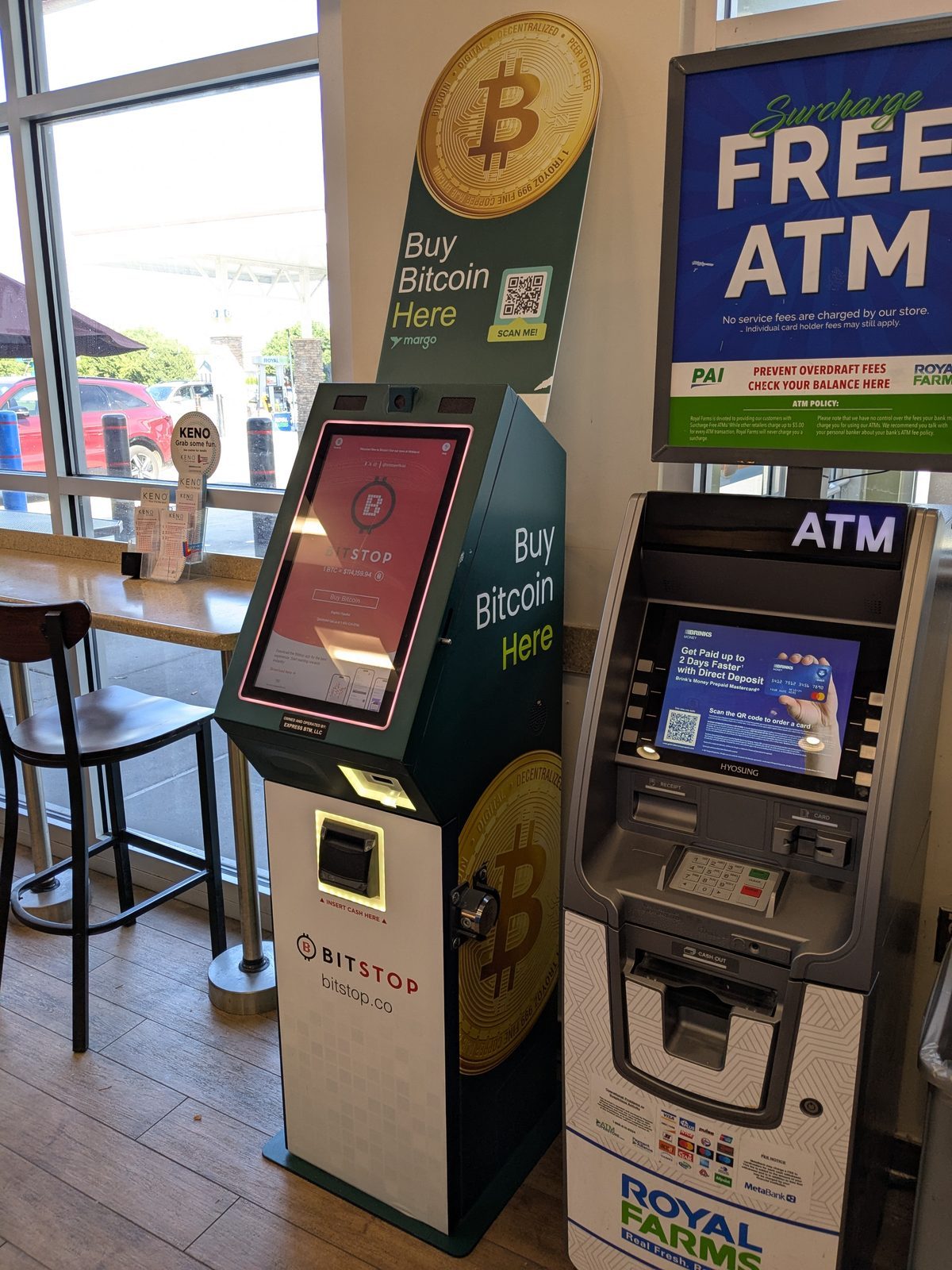
A Bitcoin ATM News representative visited two Bitstop Bitcoin ATM locations and documented what customers see today. The machines tell a story of layered identities — and raise questions about who is actually operating the disputed assets.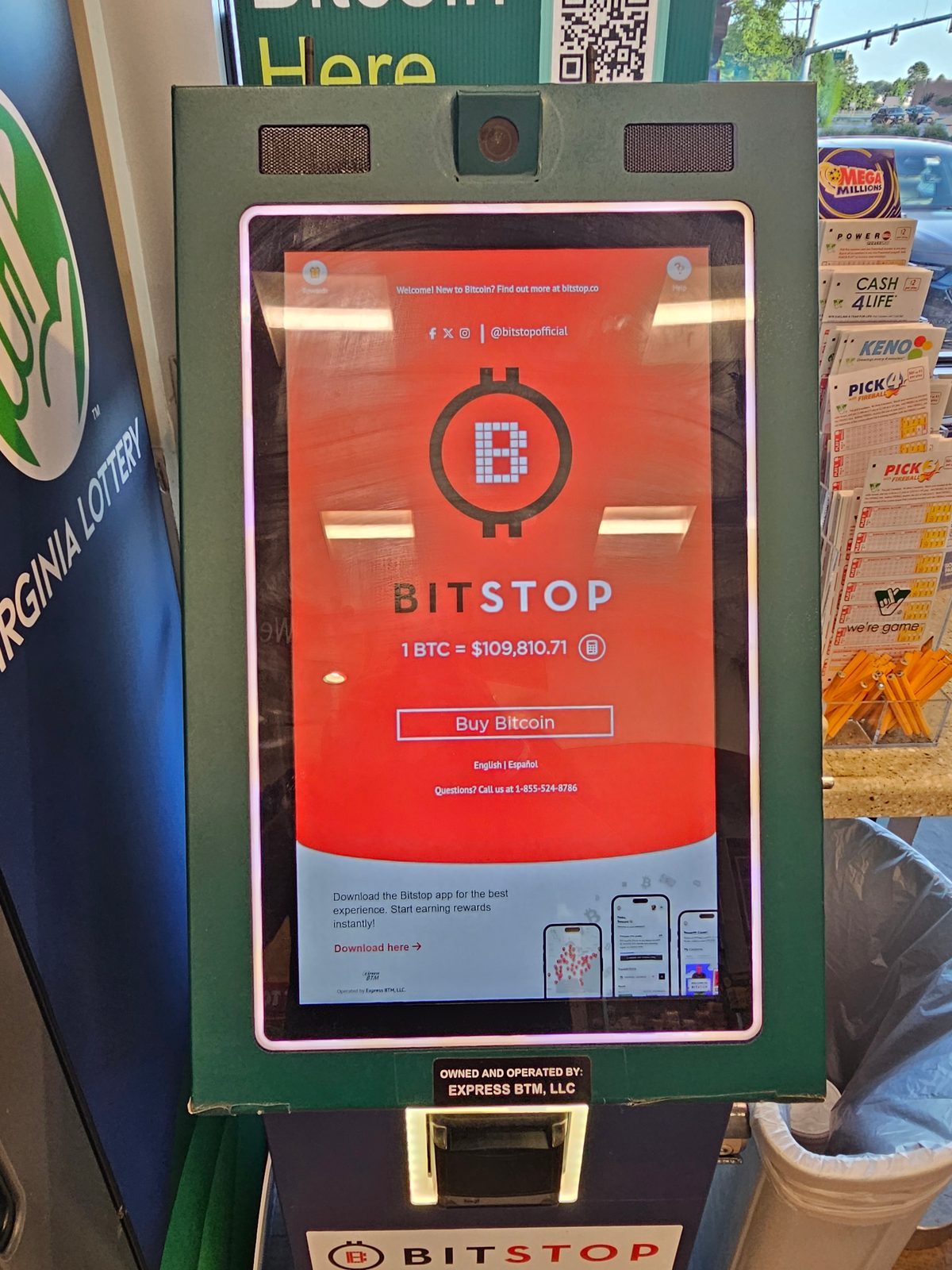
What the Machines Show
- Margo branding on the physical panels — "Margo" is a d/b/a of PowerCoin, LLC, the entity that defaulted on Chicago Atlantic's $30M loan and whose assets are now claimed as property of the Heller bankruptcy estate
- Bitstop software running on the screens — The touchscreen displays the Bitstop interface, confirming ATM Ops, Inc. controls the software layer and transaction processing
- "Owned and Operated by: Express BTM, LLC" stickers — Express BTM, LLC is understood to be a Bitstop affiliate. This sticker raises additional questions about the corporate structure through which these machines are being operated and who is collecting the revenues
- Operational since 2023, per store staff — A clerk at the Royal Farms location confirmed the Bitcoin ATMs have been in operation at that store since 2023, consistent with the timeline of PowerCoin's original placement at Royal Farms locations before the May 2024 default
The Individual Claims: A Separate Weakness
Beyond the stay arguments, the motion attacks the claims against Barnard and Carrillo individually. Bitstop argues that Chicago Atlantic's complaint alleges no independent conduct by either individual outside their corporate roles — no veil-piercing facts, no specific misrepresentations, no allegations of personal benefit distinct from their roles as officers of ATM Ops, Inc. Under Florida corporate law, officers are generally not personally liable absent well-pled facts showing they acted outside the scope of corporate authority or for personal benefit. The motion also notes that ATM Ops, Inc. holds two federal trademark registrations for "Bitstop" (Registration Nos. 4,882,467 and 5,317,681), contradicting Chicago Atlantic's complaint allegation that the entity has no right to the name.The Standing Question
Bitstop raises a potentially dispositive standing issue. If the bankruptcy court determines that Chicago Atlantic's security interest is voidable — either because the BTMs were double-pledged to other creditors, or because the loan itself was part of the Ponzi scheme's financing structure — then Chicago Atlantic loses the legal foundation for every claim in its Miami complaint. Conversion, tortious interference, breach of fiduciary duty, civil conspiracy, unjust enrichment, fraudulent transfer, constructive trust, injunction, and accounting all depend on Chicago Atlantic having a valid, enforceable security interest. The motion also argues that the fraudulent transfer claims (Count VI) may belong exclusively to the Chapter 7 Trustee, not to individual creditors. Federal courts have held that allowing individual creditors to pursue avoidance actions independently would create "near anarchy" in the bankruptcy distribution scheme.The Bigger Picture: Who Controls the Machines?
The motion frames this case as a simple priority dispute — whether Chicago Atlantic should wait its turn behind 90+ other creditors in the Heller bankruptcy. But the case raises harder questions that neither the motion nor the complaint fully addresses. If these BTMs are property of the Heller bankruptcy estate, then the Chapter 7 Trustee — not Bitstop, and not Chicago Atlantic — should control them. The Trustee has already announced plans to liquidate Heller Capital's portfolio companies, including PowerCoin. Every day the machines generate revenue under Bitstop's control, value is potentially being extracted from the estate that the Trustee is supposed to be administering for the benefit of all creditors. The DOJ has stated its intent to seek forfeiture of Heller's property up to $770 million. The Examiner documented $46.6 million flowing from PowerCoin and Heller Capital into PMG accounts used for Ponzi distributions during 2023–2024. The ownership, lien priority, and taint questions surrounding these machines are being actively litigated across multiple courts and multiple proceedings. Chicago Atlantic's strongest potential response may be to flip Bitstop's own logic: if these are estate assets, then Bitstop should stop operating them, turn over the revenues, and let the Trustee take control. The stay, if granted, should arguably restrict everyone's access to the assets — not just Chicago Atlantic's litigation rights while Bitstop continues to run the machines.What This Means for Bitcoin ATM Industry Stakeholders
This case puts a spotlight on a structural risk in Bitcoin ATM financing that lenders, operators, and merchant hosts should all understand.For Lenders and Secured Parties
- Collateral verification matters. Chicago Atlantic's perfected first-priority security interest did not prevent the same BTMs from allegedly being pledged to other parties. Lenders extending credit against Bitcoin ATM fleets should independently verify machine serial numbers, deployment locations, and existing lien positions — not rely solely on borrower representations.
- Know the operators, not just the borrowers. The PowerCoin loan was secured by physical assets, but those assets were operationally controlled by a separate entity (Bitstop). When the borrower defaulted, the secured party's ability to recover was immediately complicated by the operator's refusal to cooperate.
- Bankruptcy risk cascades. A borrower's upstream owner filing for bankruptcy can freeze a lender's enforcement rights even when the lender has a perfected security interest in specific assets. The automatic stay extends to estate property wherever it is located.
For Operators and Merchant Hosts
- Operational control is not ownership. Operating someone else's Bitcoin ATMs — even for years — does not give the operator title to the machines. If the owner's creditors come calling, the operator faces a choice between cooperating with the secured party or defending an expensive lawsuit.
- Merchant agreements are at risk. Royal Farms' relationship was originally with PowerCoin. Now Chicago Atlantic claims it as collateral, and Bitstop claims it through ongoing operation. Merchant hosts in similar arrangements should understand whose name is actually on the agreement and what happens if the ATM fleet's ownership is disputed.
- Bitstop's trust grade reflects these risks. Bitstop currently carries an F trust rating from Bitcoin ATM News, reflecting the Nebraska cease and desist for 40+ unlicensed locations, consumer fraud complaints, and the ongoing litigation with Chicago Atlantic and the related Heller/PowerCoin proceedings.
What Happens Next
Chicago Atlantic has not yet filed its opposition to the motion. Given the stakes — Chicago Atlantic's $16.96 million claim, Bitstop's continued operation of thousands of BTMs, and the competing interests of 90+ bankruptcy creditors — the response will likely address whether Bitstop can invoke the automatic stay as a shield while continuing to profit from the assets it claims belong to the estate. The bankruptcy court in New Jersey, meanwhile, continues to administer the Heller estate. The first meeting of creditors under Chapter 7 was scheduled for February 25, 2026. The Chapter 7 Trustee's approach to PowerCoin's assets — including whether to seek control of the BTMs currently operated by Bitstop — may ultimately determine where and how this dispute is resolved.Previous Coverage: Lender Sues Bitstop for Allegedly Converting 4,000+ Bitcoin ATMs (Feb 12, 2026) • Bitstop, Heller Capital, and PowerCoin: Corporate Overlap in the ATM Industry • Nebraska Cease and Desist: Bitstop's 40+ Unlicensed Locations (Nov 2025) • Bitstop's Motion for Protective Order in Federal Discovery Fight
This article is based on court filings in Chicago Atlantic Admin, LLC v. ATM Ops, Inc. d/b/a Bitstop, et al., Case No. 2026-001057-CA-01 (Miami-Dade County Circuit Court, Complex Business Division), and In re Daryl Fred Heller, No. 25-11354 (Bankr. D.N.J.). The allegations in the complaint and the arguments in the motion to stay are claims made by the respective parties and have not been adjudicated. Bitstop has not admitted the truth of any allegation in the complaint and expressly reserves the right to contest all factual allegations. The Examiner's conclusions regarding a Ponzi scheme structure are findings of a court-appointed examiner; Daryl Heller has not been convicted and is presumed innocent. Bitcoin ATM News has no financial relationship with any party in this litigation.